.png?width=500&height=200&name=Business%20Card%20technicole%20(500%20x%20200%20px).png)
Revenue System Blueprint: Map How Revenue Actually Moves Through Your Business
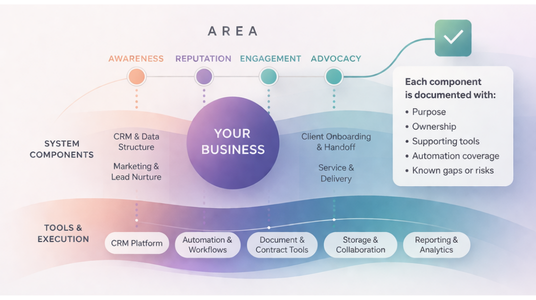
A Revenue System Blueprint maps how sales, marketing, operations, CRM data, reporting, automation, and delivery actually connect across your business.
Most B2B revenue systems are built over time rather than intentionally designed. The Blueprint creates a working revenue system map so leaders can see the current architecture, identify structural gaps, understand where manual work is compensating for missing connections, and prioritize improvements.
This isn't a general CRM audit or a list of recommended workflows. It is a documented view of how the revenue process and supporting systems work together today — and what needs to change to support what comes next.
What you get
Revenue System Map
A complete map of your current revenue system components
System Gap Analysis
Identification of structural gaps across CRM, sales ops, reporting, and automation
Go-Forward Plan
A prioritized action plan with clear next steps
Documented Baseline
A documented baseline you can build from — whether you implement it yourself or bring in support
A CRM is one part of the revenue system.
The Blueprint maps the broader architecture around it — process, data, handoffs, reporting, automation, and the connections between them.
How it works
- Complete the free Diagnostic
- Schedule your Blueprint session
- We review your system together and build your Blueprint
- Receive your completed Blueprint & documented action plan
What this Helps You See
Connections
See where your systems are working together — and where they’re not.
Gaps
Identify where manual work is filling in for missing structure or automation.
Coverage
Understand where automation exists today — and where it doesn’t.
Flow
See how leads, clients, and data actually move through your business.
Breakpoints
Spot where issues are likely to occur as your business grows or changes.
How It's Used
Decisions
Guide system and process decisions with a clear operational view.
Prioritization
Focus on improvements based on real impact, not assumptions.
Consistency
Keep teams working from the same structure across systems and processes.
Visibility
Maintain a clear view of how your systems evolve over time.